William Clark
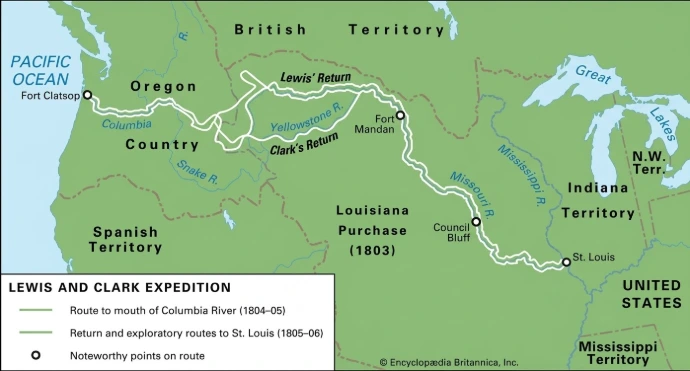
William Clark was an American explorer, soldier, Indian agent, and territorial governor. A native of Virginia, he grew up in Kentucky before settling in what became the state of Missouri. Alongside Meriwether Lewis, William led the Lewis and Clark Expedition from 1804 to 1806, traveling across the Louisiana Purchase to the Pacific Ocean and claiming the Pacific Northwest for the United States.
American Explorer
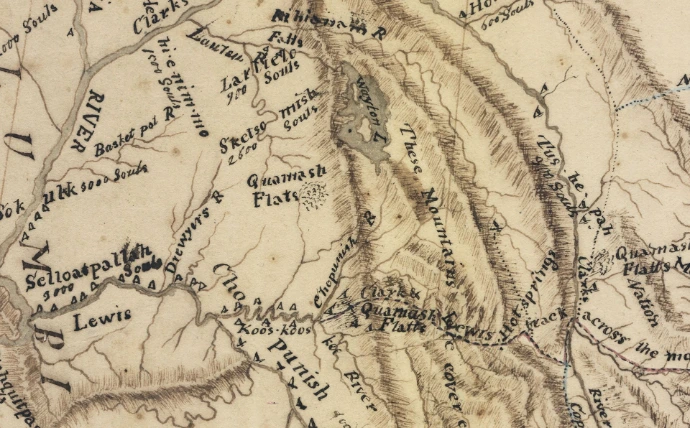
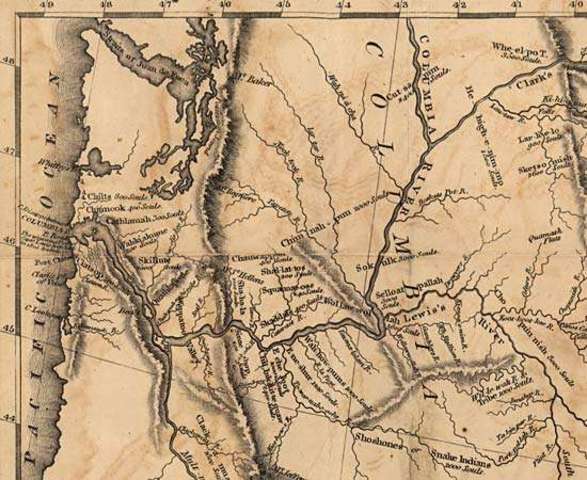
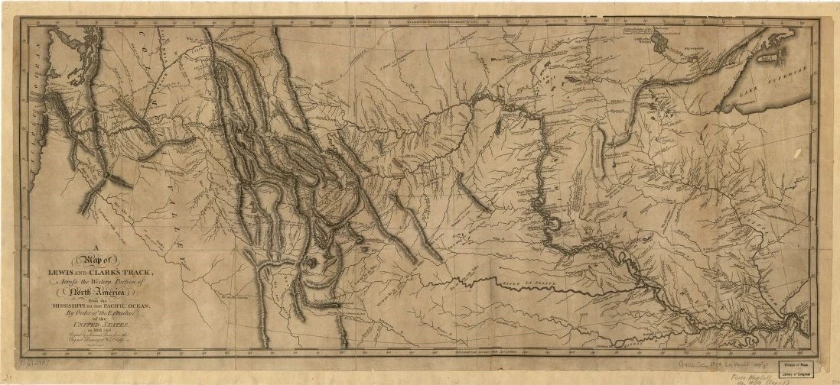
This journey was the first significant effort to explore and map the Western United States. During the expedition, William drew detailed maps that enabled the U.S. government and the nation to understand the geography of the American West. He also maintained a meticulous journal, providing invaluable insights into the region's diverse lands, Indigenous peoples, and wildlife. Following the expedition's success, William and Meriwether were celebrated as national heroes.
A Legacy of Service
In the years following the expedition, William served as the Superintendent of Indian Affairs and the Governor of the Missouri Territory, making him one of the most powerful and influential figures in the early development of St. Louis.
On September 1, 1838, at the age of 69, William died in St. Louis. Two days later, he was buried with military and Masonic honors on the farm of his nephew, Colonel John O'Fallon, in the area now known as O'Fallon Park. The entire city of St. Louis mourned his passing.
Returning to St Louis
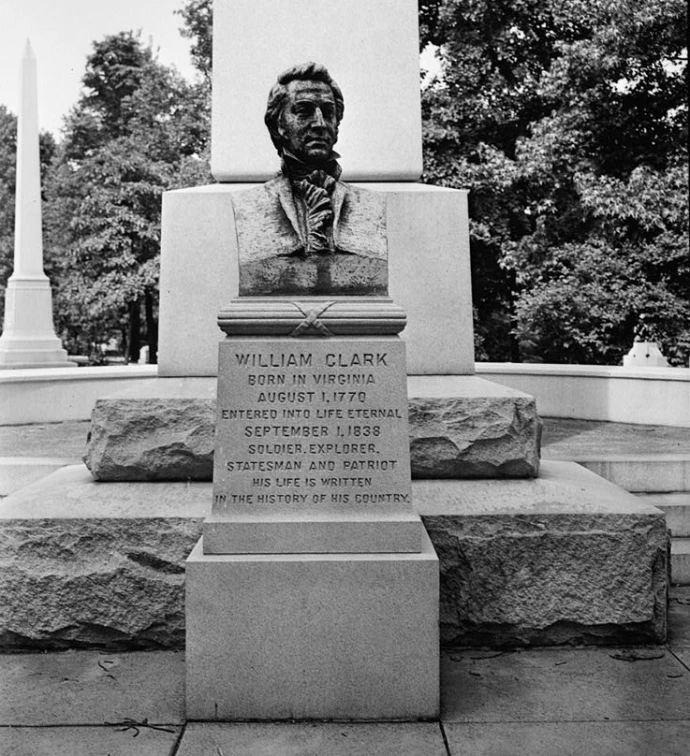
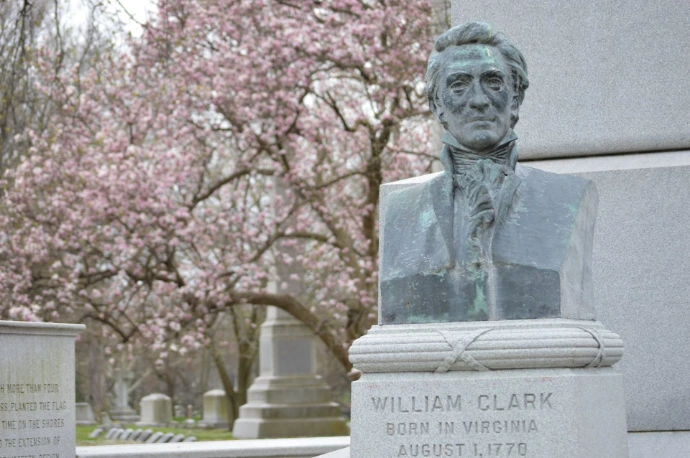
William's remains were relocated to Bellefontaine Cemetery on October 23, 1860. The monument marking his grave—a 35-foot gray granite obelisk—was dedicated in 1904 on the centennial anniversary of the Louisiana Purchase. One of William's sons, Jefferson Kearney Clark, designed the monument and commissioned it for $25,000. Following Jefferson's death in 1900, his wife oversaw the completion of the memorial.
The monument was later restored and rededicated on May 21, 2004, to mark the bicentennial of the Corps of Discovery's departure from St. Charles, Missouri. The memorial site is located in the northern section of the cemetery, situated above Meadow Lane near the Broadway Avenue entrance.
Did You Know?
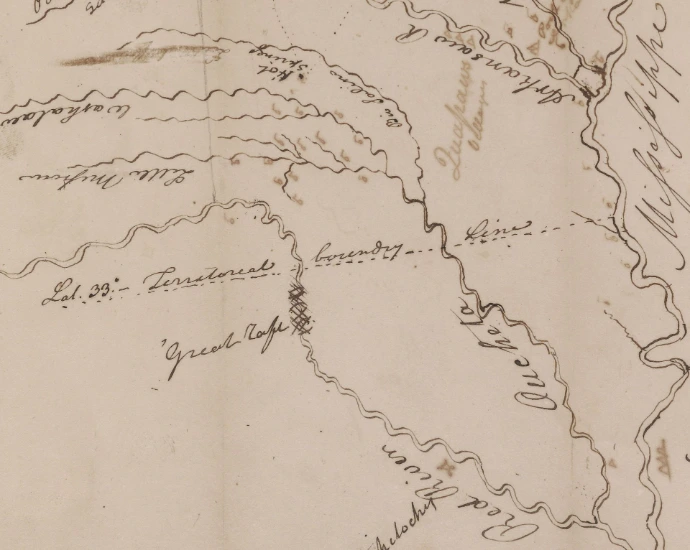
The Master Mapmaker: While Meriwether focused on describing plants and animals, William was the expedition’s primary cartographer. Despite having no formal training in mapmaking, William produced a master map of the American West in 1810 that was so accurate it remained the "gold standard" for explorers and the U.S. government for more than 30 years. His meticulous journals and sketches are the reason we have a visual record of the Corps of Discovery's route today.
Be a Part of History

Make a Gift
Support the preservation of our historic landscape and the growth of our Level III Arboretum. Your gifts to the Friends of Bellefontaine help us maintain this 314-acre urban oasis for generations to come.
View Events
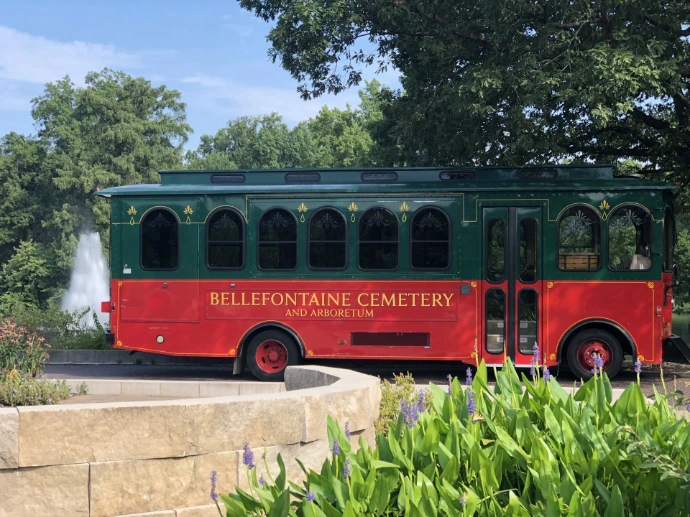
From seasonal trolley tours and walking excursions to our indoor presentation series, there is always something to discover. Explore our full calendar of upcoming history and horticulture programs.
Subscribe
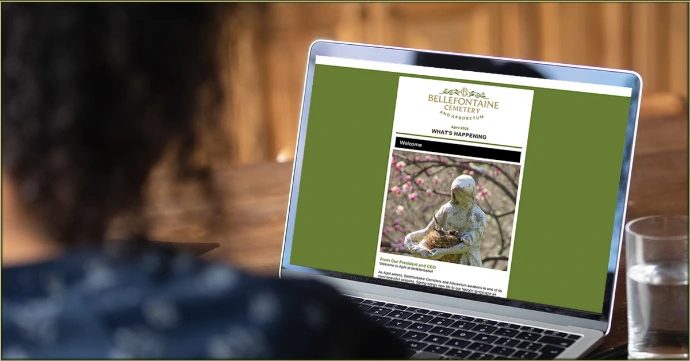
Stay connected with the Cemetery and Arboretum. Sign up for our email newsletter to receive advance notice of upcoming events, seasonal highlights, and Fresh Finds from our Cemetery Chronicler.
Volunteer
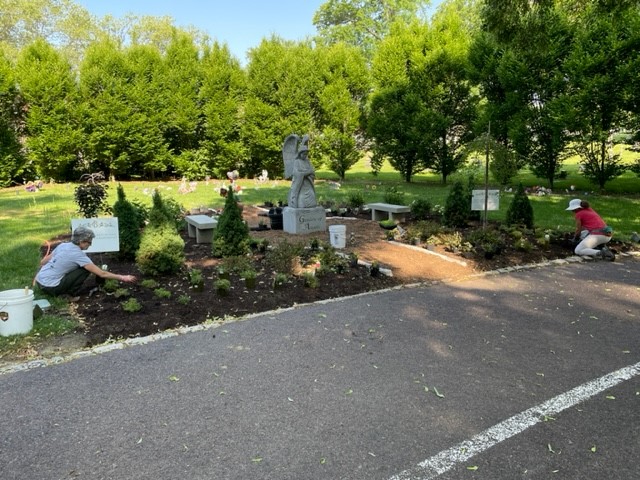
Share your passion for history or horticulture by joining our dedicated team of volunteers. Whether you are interested in research, gardening, or guest services, we welcome your unique talents.